Do you find yourself writing make sure again and again in emails, essays, and messages? Most learners do, and there's nothing wrong with the phrase itself. In fact, Dictionary.com traces “make sure” back to 1565, with “make sure of” recorded in 1673, which shows it's a long-established part of standard English rather than a trendy modern expression (Dictionary.com entry for make sure).
Still, a useful phrase can become a repetitive one. If every instruction is make sure, your English can start to sound a bit flat. A better approach is to build a small group of alternatives and choose the one that fits the situation. That gives you more control over tone, formality, and precision. If you enjoy this kind of word choice work, you might also like to explore linguistic semantics.
That's where this mini-lesson comes in. You'll see eight strong make sure synonym choices, grouped in a practical way: some are formal, some are neutral, and some are ideal for everyday speech. I'll also point out common trouble spots, especially confusing pairs like ensure and insure, so you can use them with confidence in real communication.
Table of Contents
- 1. Ensure
- 2. Verify
- 3. Confirm
- 4. Guarantee
- 5. Double-check
- 6. Ascertain
- 7. Check
- 8. See to it
- 8 Make Sure Synonyms Compared
- Putting It Into Practice Your Next Steps
1. Ensure
If you want one formal make sure synonym that works in professional English, ensure is the first word to learn. It means to make certain that something happens, usually by taking action in advance. You'll see it in policies, workplace emails, academic writing, and official instructions.
A manager might write, “Please ensure all documents are submitted by Friday.” A lecturer might write, “Please ensure your references follow the required style.” In both cases, the speaker isn't just asking for a quick check. They're asking for a reliable outcome.
When ensure works best
Ensure sounds polished and direct. It's stronger than check, and it often fits situations where process matters.
- For workplace instructions: “Ensure the client receives the updated file.”
- For academic writing: “These steps ensure consistent results.”
- For procedures and rules: “Ensure all visitors sign in at reception.”
One useful grammar point is this: ensure is usually followed by a noun or by that. For example, “ensure accuracy” and “ensure that all names are correct” are both natural.
Practical rule: Use ensure when the focus is on creating the right result, not just looking at information.
Many learners also mix up ensure and insure. In standard written English, ensure usually means “make certain”, while insure is commonly used for insurance and financial protection. If you'd like a simple explanation of that distinction, this guide on ensuring and insuring is a handy follow-up. You can also compare the two in this explanation of when to use assure or ensure.
2. Verify
Verify is more exact than make sure. It means to confirm that something is true, correct, or accurate by checking evidence, facts, or records. If ensure is about producing an outcome, verify is about proving accuracy.
That's why this word turns up so often in research, technology, compliance, and quality control. In a workplace system, someone might say, “Verify user credentials before granting access.” In a lab report, a student might write, “We verified the result by comparing it with the original data.”

A good fit for facts and evidence
Choose verify when proof matters. It's especially useful when a person checks documents, measurements, figures, identity, or claims.
- In exam preparation: “Verify your calculations before writing the final answer.”
- In office work: “Please verify the customer's address.”
- In editing: “Verify every date and spelling before publication.”
This word sounds formal, but it's not stiff. It's common in everyday professional English, especially in settings where people need to avoid mistakes. If you're writing an essay or report, verify often sounds more precise than make sure.
A small warning, though. Don't use verify for every situation. “Verify that you bring a jacket” sounds odd in normal conversation. There, remember to bring or make sure you bring is more natural.
3. Confirm
Confirm sits nicely in the middle. It isn't as formal as ascertain, and it isn't as casual as check. It usually means to state clearly that something is correct, agreed, received, or arranged.
This is one of the most useful alternatives for real communication. If you work with bookings, meetings, orders, or email chains, you'll use confirm all the time. “Please confirm your appointment time” sounds natural. So does “Can you confirm receipt of this message?”
Best for communication and coordination
Confirm is ideal when two people are aligning details. It often suggests a reply, acknowledgement, or final agreement.
- For meetings: “Let me confirm the time with the team.”
- For customer service: “Please confirm your booking by email.”
- For routine office use: “Could you confirm that the attachment opened correctly?”
In many daily situations, confirm is the best make sure synonym because it sounds polite and clear without being too formal.
There's also a nice grammar pattern to remember. You can confirm something or confirm that…
For example: “I'm writing to confirm the interview date” and “I'm writing to confirm that the interview is on Tuesday.”
If you're helping learners sound more natural, this article on are you sure that is useful because it shows how certainty is expressed in everyday English, not just in formal writing.
4. Guarantee
Guarantee is a strong word. Stronger than ensure, stronger than confirm, and much stronger than check. When someone uses it, they're not just trying to make something happen. They're promising it.
That makes it powerful in marketing, sales language, customer service, and product promises. You might read, “We guarantee a refund if the item arrives damaged,” or “The company guarantees replacement within the warranty period.” In tutoring or teaching contexts, people also use it in promotional language, though that needs care.

Use it carefully
Because guarantee sounds so confident, you shouldn't use it casually in every context. “I guarantee I'll check your essay tonight” may sound dramatic unless you intend it as a promise.
Here are good uses:
- For warranties: “This phone comes with a guarantee.”
- For service commitments: “We guarantee a written reply within one working day.”
- For promises: “I can't guarantee success, but I can guarantee careful preparation.”
That last example is especially useful for teachers and managers. It shows honesty and confidence at the same time. You're promising effort or support, not an unrealistic outcome.
If you're choosing between ensure and guarantee, think about certainty. Ensure often means taking steps to produce a result. Guarantee means giving your word that the result will happen. That's a big difference.
5. Double-check
Now we move into more conversational English. Double-check is one of the friendliest alternatives to make sure, and learners love it because it sounds natural straight away. It means to check something again, often to avoid a mistake.
You'll hear it in classrooms, homes, offices, and group chats. “Double-check your grammar before you submit the essay” is a classic teacher sentence. “Can you double-check these figures?” is common in workplace English too.
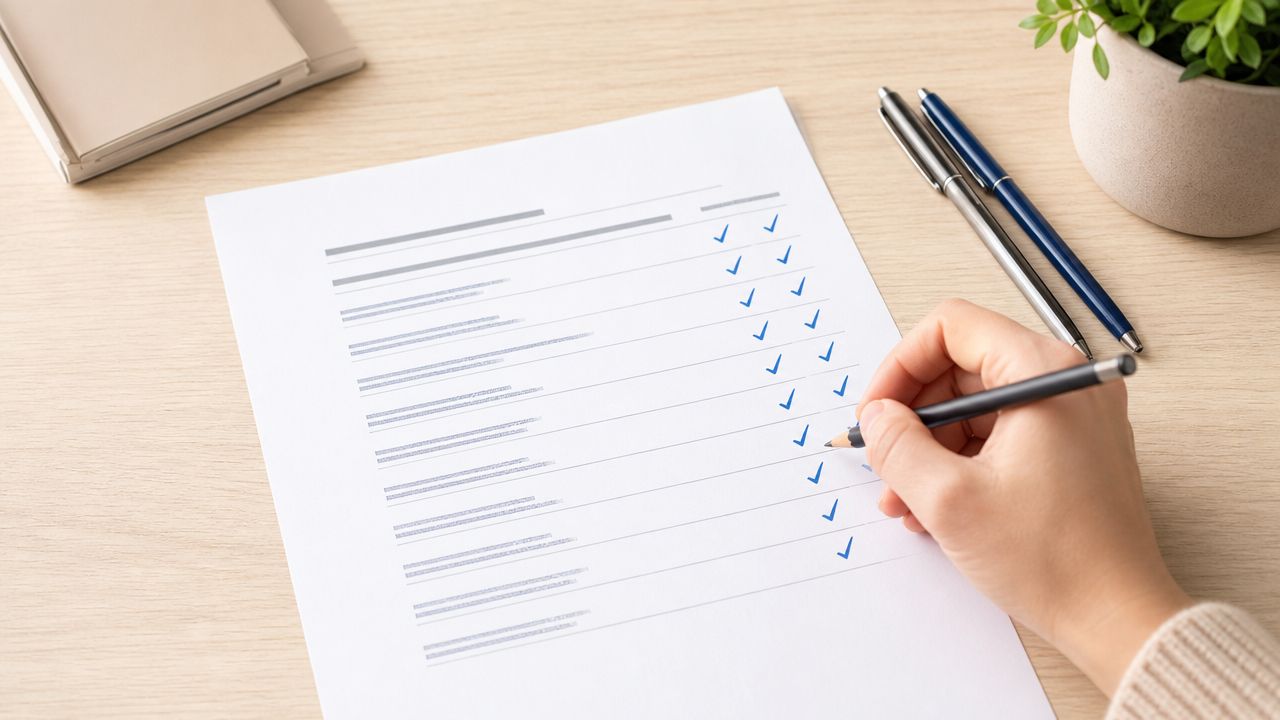
A visual reminder helps here:
Friendly and practical
This phrase works well because it feels supportive, not severe. If a boss says verify, that can sound quite formal. If a teacher says double-check, it often feels encouraging.
Use it in situations like these:
- For students: “Double-check your answers before handing in the test.”
- For writing: “Double-check the spelling of names.”
- For teamwork: “I've updated the file. Could you double-check the final page?”
QuillBot's examples are useful here because they show that replacing make sure often needs a full rewrite, not just one word. One example changes “make sure you packed pajamas” to “double-check that you packed pajamas,” which matches the idea of reviewing something already done (QuillBot examples of make sure rewrites).
Here's a short listening break if you like learning through video as well as reading:
The key difference is simple. Double-check suggests a second look. It's perfect when the action has already happened and you want to catch errors before it's too late.
6. Ascertain
Ascertain is the most advanced word on this list. It means to find out something with certainty, usually after checking, investigating, or asking questions. It's formal, and in everyday speech it can sound a bit literary, but in essays, reports, and legal or academic English it fits well.
You might read, “The investigators sought to ascertain the facts,” or “The study attempted to ascertain whether the pattern was consistent.” This word doesn't just mean make sure. It carries the idea of discovery through careful inquiry.
A more advanced formal choice
For many learners, ascertain is useful as a recognition word first. You should understand it when you read it, even if you don't use it every day. Then, when you're writing a formal essay, you can use it where it is appropriate.
- In research writing: “The team sought to ascertain the cause of the error.”
- In formal reports: “We must first ascertain the relevant facts.”
- In legal contexts: “The court will ascertain whether the statement was accurate.”
Use ascertain when someone must discover the truth through investigation, not when they're simply doing a quick check.
This distinction matters. “Ascertain your homework is in your bag” doesn't sound natural. “Check your homework is in your bag” is much better. But “The panel sought to ascertain whether the evidence supported the claim” sounds exactly right.
Advanced learners often overuse formal words because they want to sound impressive. My advice is simple. Use ascertain when the context is formal enough to support it. Otherwise, find out, check, confirm, or verify will usually do the job more naturally.
7. Check
Sometimes the simplest word wins. Check is the most common, flexible, and learner-friendly alternative to make sure. It can mean inspect, look at, review, confirm, or test, depending on the context.
That broad meaning is exactly why it's useful. In daily English, you can say, “Check your email,” “Check the timetable,” “Check your spelling,” or “Check whether the door is locked.” It works in casual conversation, study advice, and workplace communication.
The simplest option is often the best
Don't underestimate check just because it's basic. Clear English is good English, especially when you need to be understood quickly.
- In everyday life: “Check the weather before you leave.”
- In learning: “Check your notes after class.”
- In writing: “Check this paragraph before I send it.”
This is also the best choice for many intermediate learners, because it's easy to remember and easy to use accurately. If you're unsure which make sure synonym fits, check is often the safest option.
One style tip matters here. Check is broad, so add a clear object whenever you can. “Check it” is vague. “Check the invoice total” is much better. “Check whether the link works” is clearer again.
If you're working on accuracy in writing, this explanation of incorrect and not correct is useful because it helps with another common point in editing and correction language.
8. See to it
See to it is an idiomatic phrase, and it adds a slightly different feeling from the others. It means to take responsibility for making something happen. This isn't just about checking. It's about ownership.
A team leader might say, “I'll see to it that the forms are reviewed today.” A parent might say, “See to it that the lights are turned off.” In both cases, the speaker focuses on personal responsibility and follow-through.
Responsibility is the key idea
This phrase is especially good when you want to sound firm, capable, or accountable. It appears in professional speech, management language, and British-style instruction more often than in casual student conversation.
- For managers: “Please see to it that all staff receive the update.”
- For client care: “We'll see to it that your account is set up correctly.”
- For leadership language: “I'll see to it that the matter is handled properly.”
This phrase doesn't just ask for certainty. It suggests that someone will personally deal with the task.
Because it's idiomatic, learners should learn it as a chunk. The common pattern is see to it that… followed by a clause. For example, “She saw to it that everyone had transport home.”
It's semi-formal rather than highly formal. It sounds natural in spoken British English and in written instructions where responsibility matters. If ensure sounds procedural, see to it sounds human. Someone is taking charge.
8 Make Sure Synonyms Compared
| Term | Implementation complexity | Resource requirements | Expected outcomes | Ideal use cases | Key advantages |
|---|---|---|---|---|---|
| Ensure | Low, requires coordinated actions to secure a result | Operational steps, monitoring, staff/time as needed | Outcome achieved or strongly likely; reduced risk | Formal instructions, policies, compliance | Authoritative, professional; conveys responsibility |
| Verify | Moderate, systematic checks or tests needed | Evidence, tools, testing procedures, documentation | Validated accuracy with supporting proof | Scientific writing, QA, IT, data validation | Rigorous and precise; trusted in technical fields |
| Confirm | Low, simple acknowledgment or secondary check | Minimal, a reply, sign-off, or quick check | Agreement or acknowledgment; scheduling clarity | Customer service, scheduling, emails | Versatile and conversational; good for coordination |
| Guarantee | Moderate–High, requires commitments and backing | Legal/operational commitments, resources, warranties | Strong assurance; increased trust but potential liability | Sales copy, warranties, service promises | Persuasive and clear; builds consumer confidence |
| Double-check | Low, perform a repeat review or inspection | Time for a second review; practical effort | Fewer errors; improved accuracy | Peer review, daily tasks, informal checks | Approachable; emphasizes thoroughness without formality |
| Ascertain | High, investigative work and analysis required | Time, research, data collection, expertise | Established facts or definitive findings | Academic research, legal inquiries, scholarly writing | Authoritative and thorough; suited for formal inquiry |
| Check | Minimal, quick inspection or glance | Very low, brief time or attention | Basic confirmation or status check | Daily communication, quick verifications, beginner instructions | Most versatile and accessible; efficient and direct |
| See to it | Moderate, requires personal follow-through and oversight | Assigned person/time and accountability | Task handled with responsibility; ensured completion | Leadership communication, task assignments, accountability contexts | Emphasizes action and ownership; professional but approachable |
Putting It Into Practice Your Next Steps
Well done. You now have eight strong alternatives to make sure, and you understand they don't all mean the same thing. This represents a true step forward in vocabulary building. Good English isn't about replacing every common phrase with a fancier one, but about choosing the word that matches your purpose.
If you want a formal option for professional writing, ensure is often the best choice. If you need proof and accuracy, go with verify. If you're arranging details with another person, confirm is usually the natural fit. For a strong promise, use guarantee carefully. In everyday study and office life, double-check and check are both excellent. For advanced formal writing, ascertain can work beautifully. And if you want to stress responsibility, see to it does that job well.
There's another reason this matters. Major reference tools show that make sure belongs to a very wide synonym network. Thesaurus.com lists 239 related words and antonyms for “make sure,” and Cambridge records 48 synonyms and antonyms, including ensure, confirm, verify, and secure (Thesaurus.com synonym listing for make sure). That tells us something useful as teachers and learners. This isn't one small phrase with one neat replacement. It's the centre of a bigger vocabulary family.
That means your next step should be practical, not theoretical. Pick one situation from your real life and try a better-fit alternative today. If you're sending a work email, write Please confirm receipt. If you're editing an essay, write Double-check your references. If you're creating instructions, try Ensure all fields are completed. Short practice like that helps new vocabulary stick.
It also helps to remember that some replacements need a sentence rewrite rather than a simple swap. A direct one-word substitution won't always sound natural. That's normal. Native speakers do this too. We often change the whole sentence slightly so the tone feels right.
If you'd like more support with this kind of vocabulary work, One Minute English is one relevant option. It offers short lessons, tools, and vocabulary support for learners who want clearer everyday English. You could also use its synonym-related resources as a simple way to keep building range without making your writing sound unnatural.
The main thing is this. Don't try to use all eight words at once. Learn them one by one, notice where each one fits, and practise them in real sentences. That's how vocabulary becomes active, confident English.
If you're building better vocabulary for emails, study, or speaking, have a look at One Minute English. It's a practical learning hub from a Dublin-based CELTA-certified teacher, with short lessons and free tools that can help you use words like ensure, confirm, and verify more naturally.
Crafted with Outrank app

- Winston AI Review 2026: The Best AI Detector for Teachers? - September 1, 2026
- The Best AI Humanizers of 2026: I Tested and Ranked 25 Tools - August 25, 2026
- Powerful Synonyms for So: Enhance Your Writing - June 6, 2026